
A Jinja-aware filetype for dbt models in Neovim.
Neovim opens dbt models as plain SQL, so the SQL parser trips over every {{ ref() }} and none of
the Jinja is highlighted. dbt-ft.nvim gives models their own dbt filetype, which Tree-sitter
parses as Jinja with the SQL between the tags handed to the SQL parser. Highlighting, folding, and
indenting then understand both languages, and a dbt buffer still gets what Neovim gives a sql
buffer.
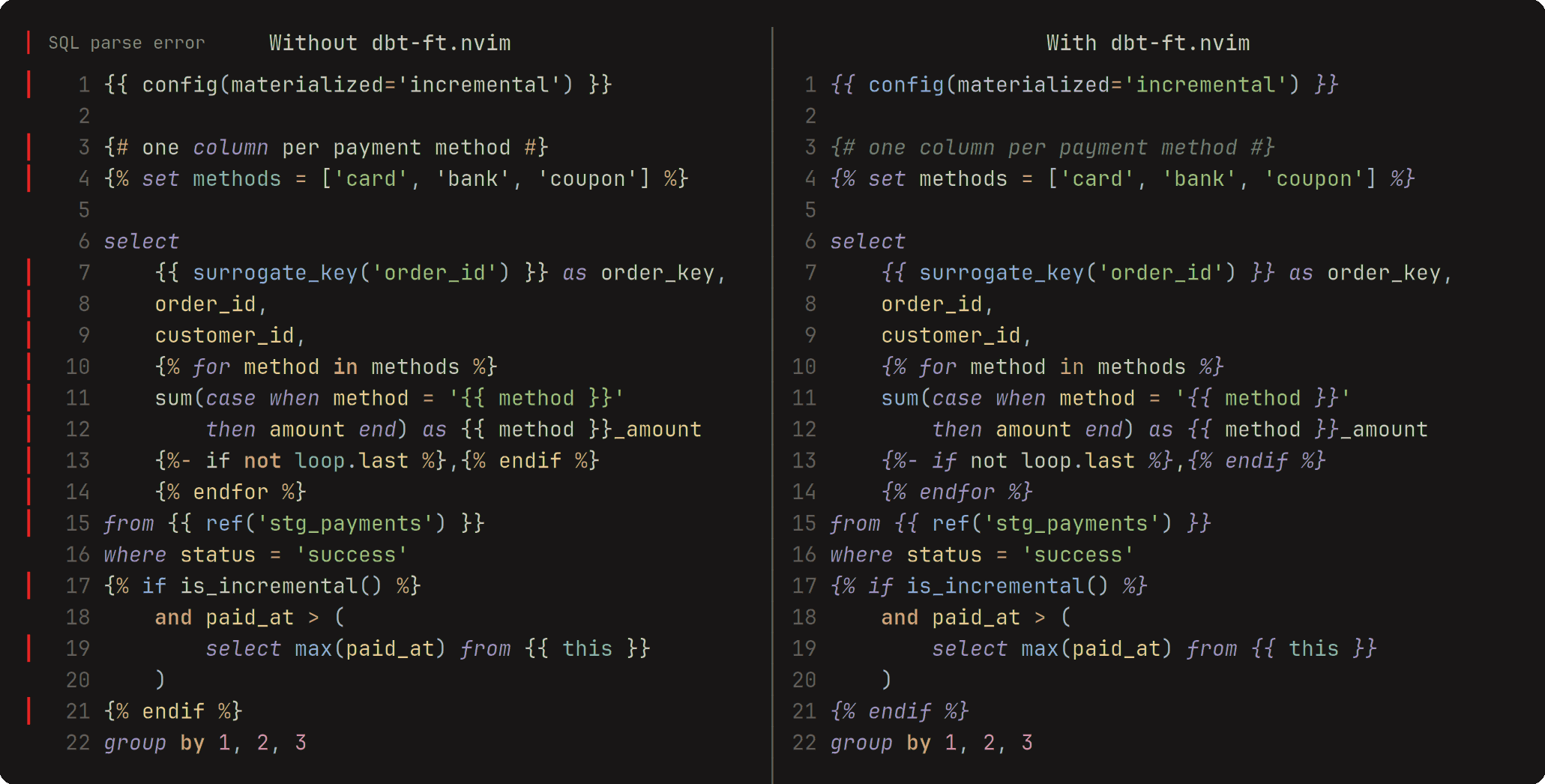
There are no commands and no setup function.
.sqlfiles in a dbt project get thedbtfiletype, except dbt's compiled output intarget/.- The SQL around the Jinja tags, and each
{{ }}expression, go to the SQL parser as one document, sofrom {{ ref('orders') }} whereparses and highlights as SQL. - dbt's functions and context variables, such as
ref,config,this, andtarget, highlight as built-ins, so they stand out from your own macros. - With Tree-sitter folding and indenting on, Jinja blocks fold, and SQL keeps its folds and indents.
- The indent and
'textwidth'follow the project's SQLFluff config, with dbt Labs' four spaces where it sets no indent. A project's EditorConfig overrides both. gcuses{# #}on a line that starts with a Jinja tag, indented or not, and--elsewhere.- Enter or
oon a--comment line starts the new line with--too. %moves between a Jinja block's tags, such as{% if %},{% else %}, and{% endif %}.gfon aref()opens the model it names.- With yaml-language-server, a project's YAML gets dbt's schemas for validation, completion, and
hover, even when the project's directory doesn't have
dbtin its name.
See :help dbt-ft for details and limitations.
- Neovim 0.12 or later.
- The
jinja,jinja_inline, andsqlTree-sitter parsers, for example from nvim-treesitter with:TSInstall jinja jinja_inline sql.
With vim.pack:
vim.pack.add({ "https://github.com/dobsontom/dbt-ft.nvim" })With lazy.nvim:
{ "dobsontom/dbt-ft.nvim" }Don't lazy-load it: it does almost nothing at startup, and it can't load on the dbt filetype,
which only it detects.
LazyVim starts Tree-sitter for dbt buffers by itself. If your config starts it for a list of
filetypes, add dbt to the list:
vim.api.nvim_create_autocmd("FileType", {
  pattern = { "dbt", "sql" },
  callback = function()
    vim.treesitter.start()
  end,
})
Language servers, formatters, and linters set up for sql don't run on dbt buffers, which keeps
the ones that can't read Jinja off your models. Add dbt to those that can. See
:help dbt-ft-formatting for conform.nvim and nvim-lint, as SQLFluff's dbt
templater can't read the buffer, and :help dbt-ft-snippets for blink.cmp and
LuaSnip.
The dbt language server, dbt lsp, comes with dbt v2, not dbt-core 1.x. With
nvim-lspconfig, whose dbt config already covers the
dbt filetype, enable it:
vim.lsp.enable("dbt")See :help dbt-ft-lsp for setting it up without nvim-lspconfig.
Run :checkhealth dbt-ft to check the setup.
| Option | Set it to | To |
|---|---|---|
vim.g.dbt_ft_yaml_schemas |
false or 0 |
leave yaml-language-server's schema mappings alone |
vim.g.dbt_recommended_style |
false or 0 |
keep your own indent and 'textwidth' in dbt buffers |
vim.g.loaded_dbt_ft |
1, before it loads |
turn dbt-ft.nvim off |
make test runs the tests, and builds the parsers they need on its first run, which needs Git, a C
compiler, and the tree-sitter CLI. make format and
make lint also need StyLua,
selene,
lua-language-server,
ts_query_ls, oxfmt, and
jq. prek runs all three as Git hooks.