
🌐 Check out the project page to try out CRAX yourself and claim a spot on the leaderboard!
CRAX is a high-performance benchmark for Constrained Reinforcement Learning (Safe RL) built on top of Brax and MuJoCo XLA (MJX). It provides GPU/TPU-accelerated environments with safety constraints and a suite of state-of-the-art safe RL algorithms.
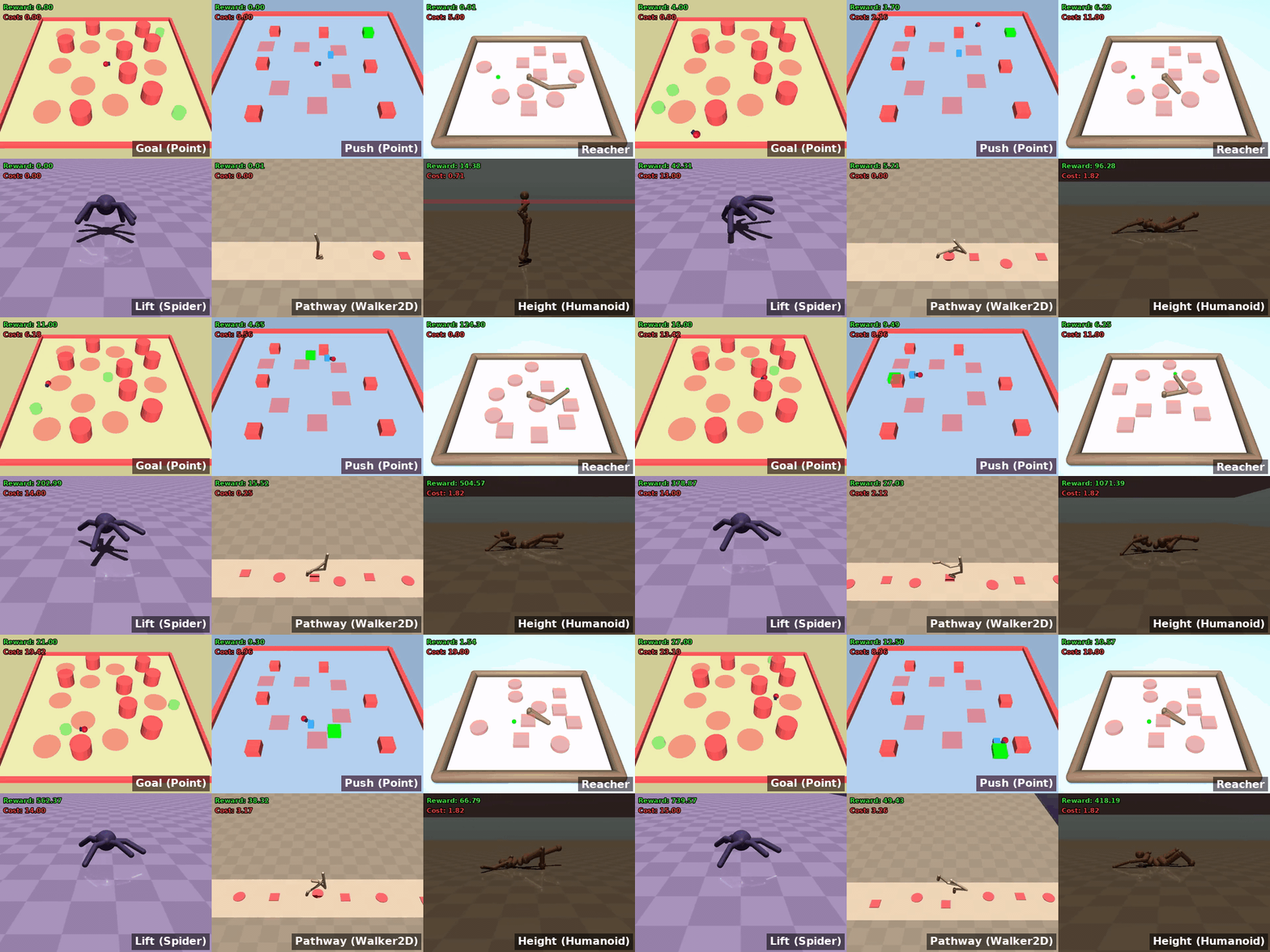
- Massively parallel simulation: Train agents across thousands of environments simultaneously on GPU/TPU
- Configurable difficulty levels: Environments with varying numbers and types of hazards
- Multiple constraint types: Cylindrical hazards, cubical hazards, boundary constraints, velocity limits, and more
- State-of-the-art algorithms: Implementations of leading constrained RL methods
CRAX includes efficient JAX implementations of the following, selected with the
--alg flag:
| Algorithm | Flag | Description | Reference |
|---|---|---|---|
| PPO | ppo |
Vanilla PPO (unconstrained on-policy baseline) | Schulman et al., 2017 |
| PPO-Cost | ppo_cost |
PPO with a cost penalty folded into the reward | |
| PPO-Lagrange | ppo_lag |
PPO with Lagrangian relaxation for constraints | Ray et al., 2019 |
| PPO-PID | ppo_pid |
PPO with PID-controlled Lagrange multiplier | Stooke et al., 2020 |
| PPO-Saute | ppo_saute |
State Augmentation for Safe RL | Sootla et al., 2022 |
| FOCOPS | focops |
First Order Constrained Optimization in Policy Space | Zhang et al., 2020 |
| P3O | p3o |
Penalized Proximal Policy Optimization | Zhang et al., 2022 |
| CRPO | crpo |
Constrained Rectified Policy Optimization | Xu et al., 2021 |
| SAC | sac |
Soft Actor-Critic (unconstrained off-policy baseline) | Haarnoja et al., 2018 |
| SAC-Lagrange | sac_lag |
SAC with Lagrangian relaxation for constraints | |
| SAC-PID | sac_pid |
SAC with PID-controlled Lagrange multiplier |
All algorithms share a common training infrastructure with hooks for custom loss functions and constraint handling, making it easy to implement new methods. The registry lives in get_algorithm_train_fn in crax/training/run_utils.py; each algorithm adds its own CLI section in crax/training/config.py (--safety_bound, --pid_kp, --nu_lr, --tau, ...), and irrelevant arguments are filtered out per algorithm by filter_kwargs_for_fn.
CRAX environments follow a task-agent naming convention: safe_<task>_<agent>.
| Task | Agents Supported | Description |
|---|---|---|
| Goal | Point, Ant, Spider, Humanoid, Swimmer | Navigate to goal positions while avoiding hazards |
| Circle | Point, Ant, Spider, Humanoid, Swimmer | Orbit a circular path within boundaries |
| Button | Point, Ant, Spider, Humanoid, Swimmer | Press target buttons while avoiding gremlins and hazards |
| Push | Point, Ant, Spider, Humanoid, Swimmer | Push a block to a goal while avoiding hazards |
| Velocity | Ant, Humanoid, HalfCheetah, Hopper, Swimmer, Walker2D | Locomotion under maximum velocity constraints |
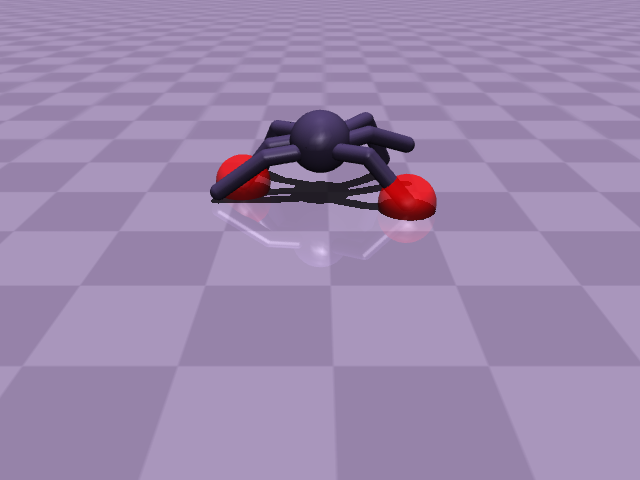
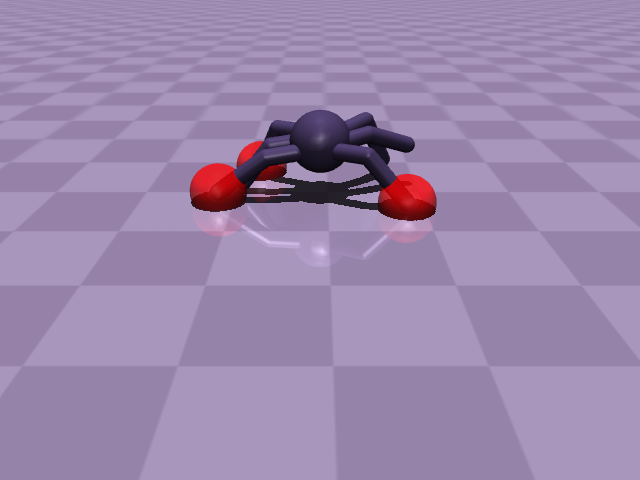
| Lift | Ant, Humanoid, Spider | Locomotion with restricted legs touching the floor |
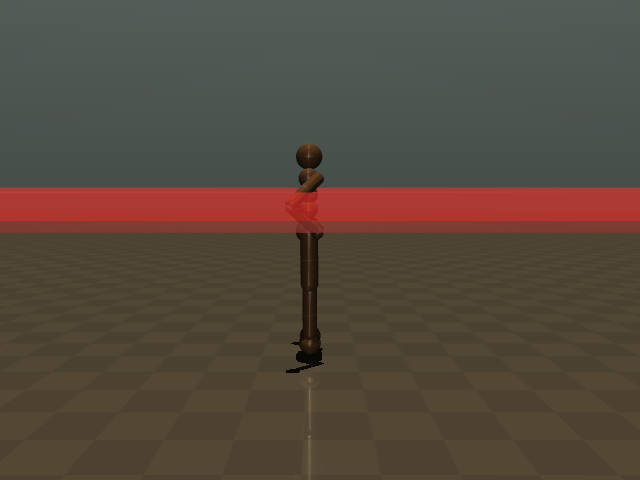
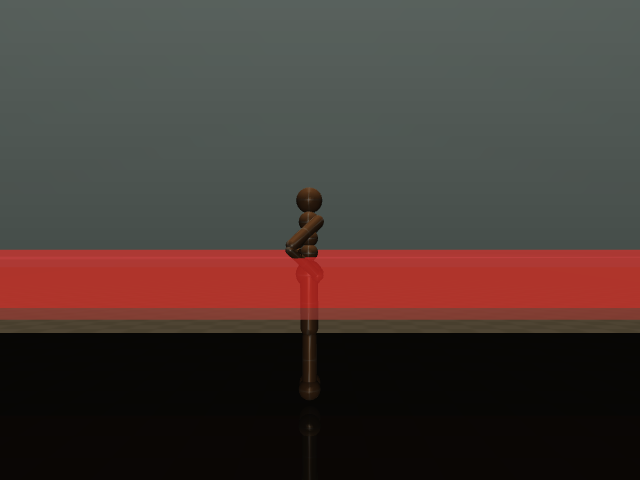
| Height | Humanoid, HalfCheetah, Hopper, Walker2D | Locomotion under a height ceiling |
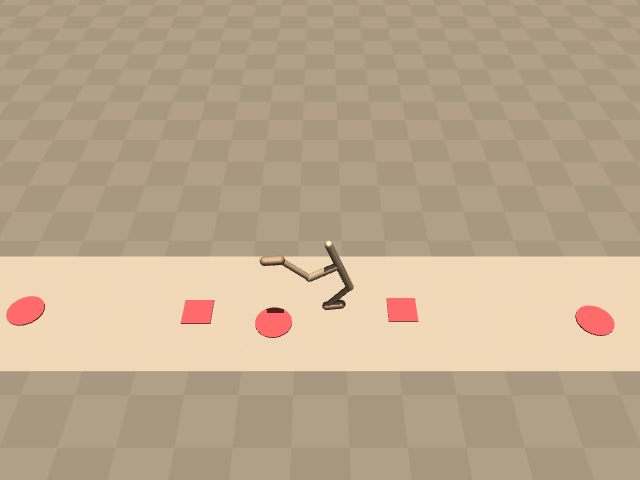
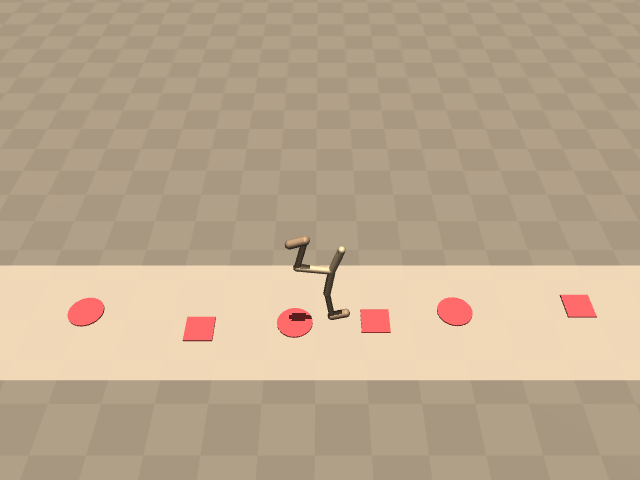
| Pathway | HalfCheetah, Hopper, Walker2D | Traverse a corridor with hazard gaps |
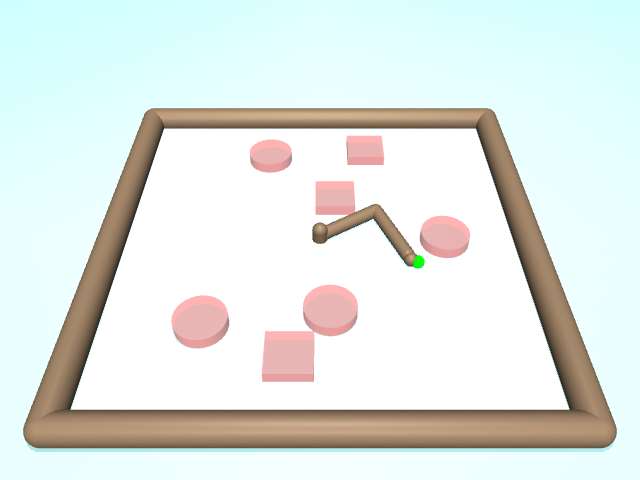
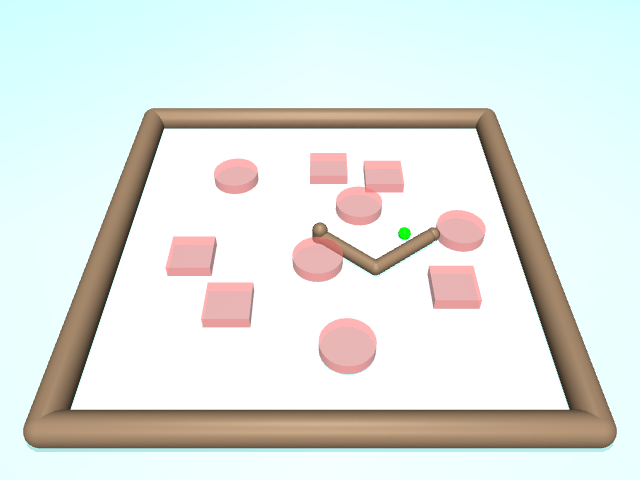
| Reacher | Reacher | Robotic arm reaching targets while avoiding obstacles |
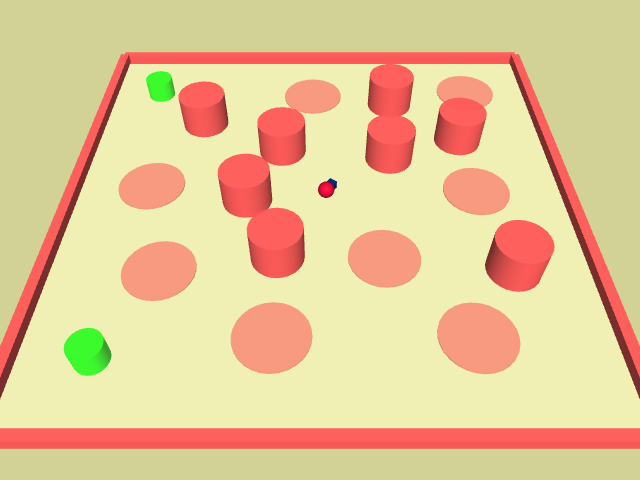
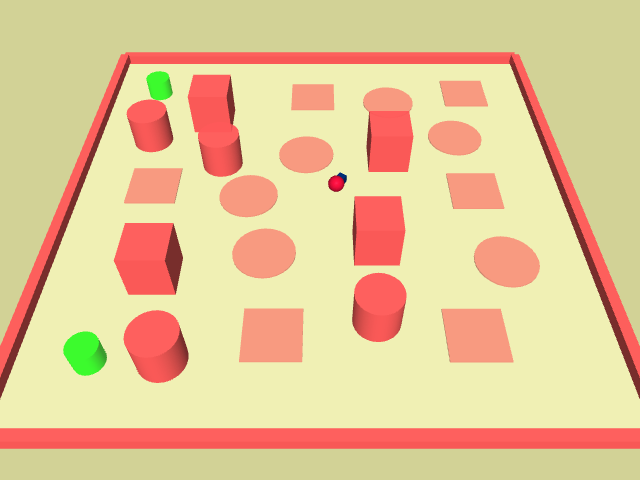
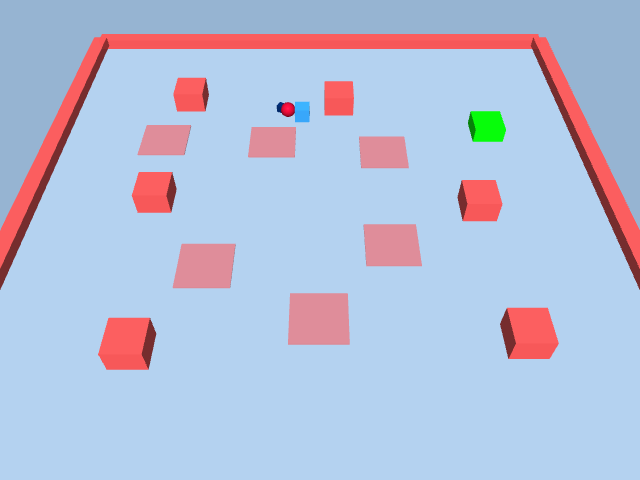
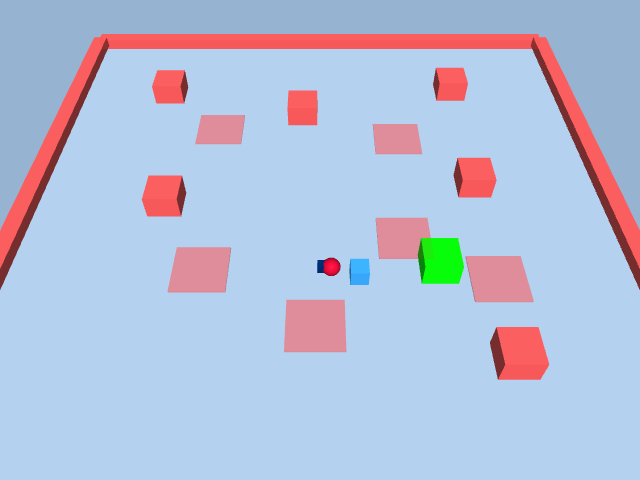
Every environment offers three difficulty levels that progressively increase constraint difficulty.
| Environment | Level 1 | Level 2 | Level 3 |
|---|---|---|---|
| Goal | 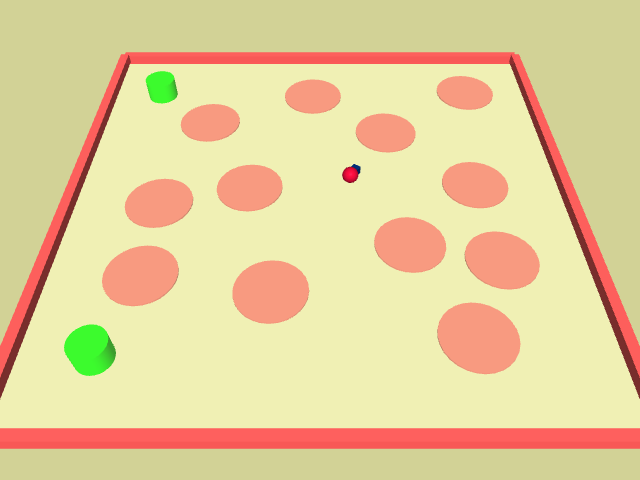 |
 |
 |
| Circle | 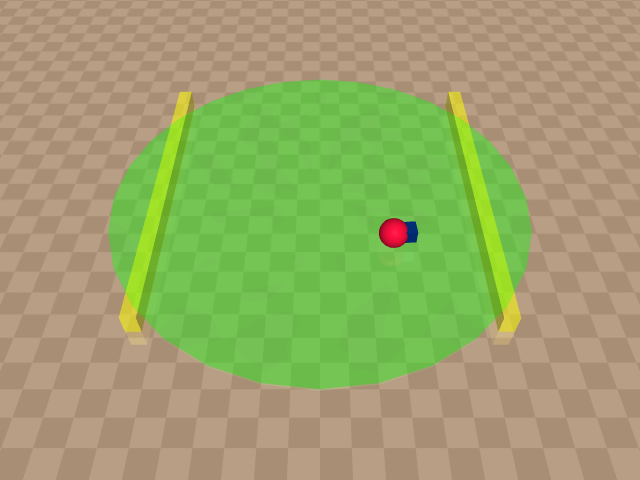 |
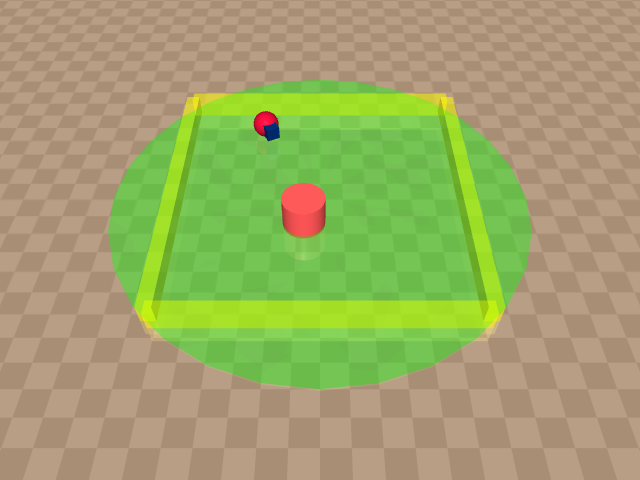 |
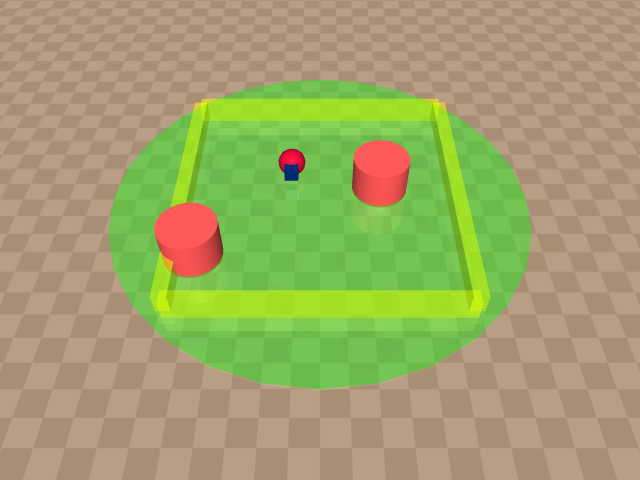 |
| Push | 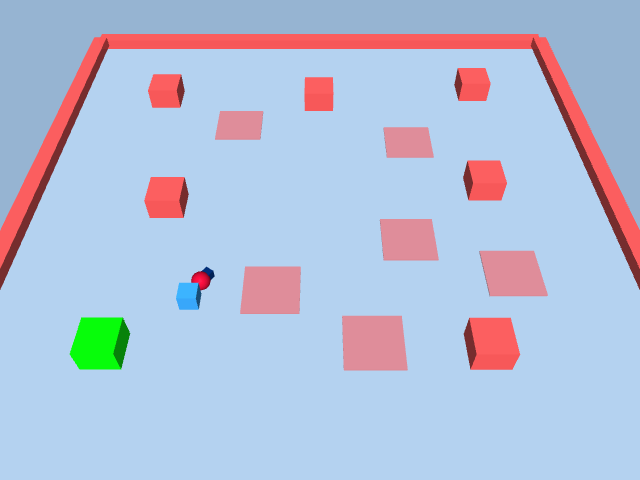 |
 |
 |
| Reacher | 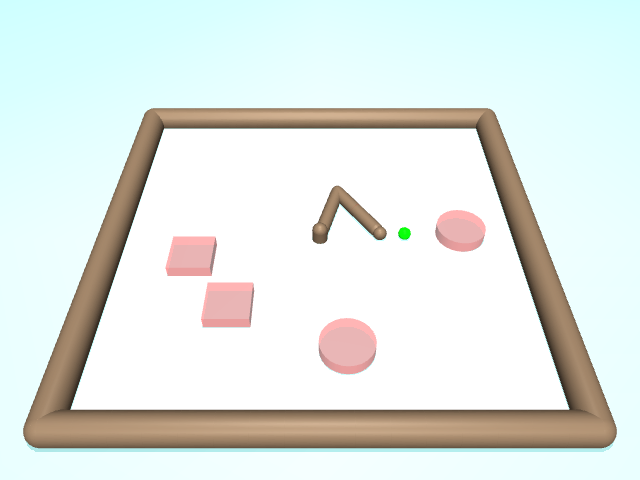 |
 |
 |
| Pathway | 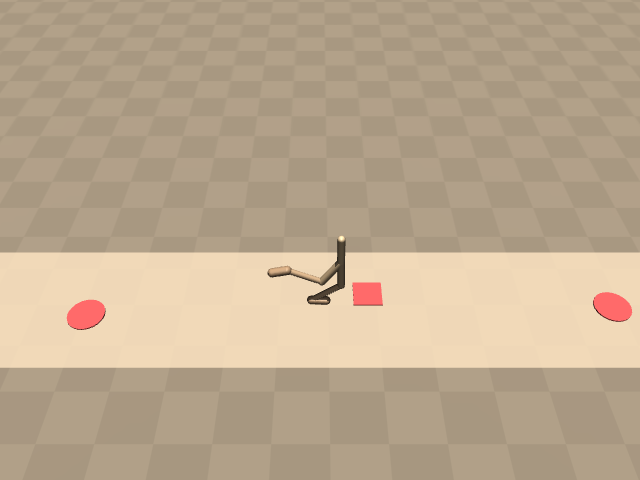 |
 |
 |
| Height | 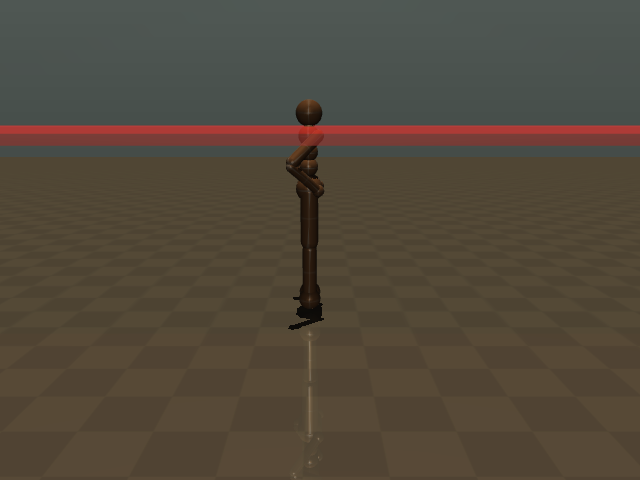 |
 |
 |
| Lift | 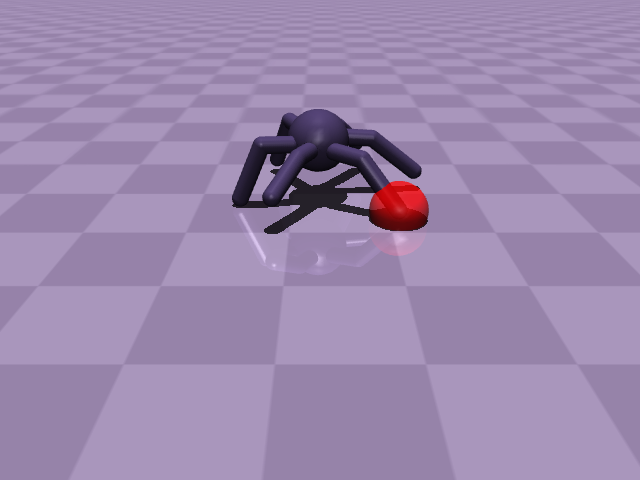 |
 |
 |
CRAX is published on PyPI as crax-bench (the import name is crax):
pip install crax-bench             # environments only
pip install "crax-bench[train]"    # + the RL algorithms in crax.training
To work on CRAX itself, or to use the scripts in results/ and scripts/,
install from source:
git clone https://github.com/TTomilin/CRAX.git
cd CRAX
Create and activate a virtual environment using your preferred tool:
# Option A: venv
python3 -m venv .venv && source .venv/bin/activate

# Option B: conda
conda create -n crax python=3.11 && conda activate crax
Then install the package. The base install contains only what is needed to build, step and render environments — no RL dependencies:
pip install -e .To train agents, install the train extra, which adds the crax.training
dependencies (optax, orbax, wandb):
pip install -e ".[train]"Other extras:
| Extra | Adds | For |
|---|---|---|
train |
optax, orbax-checkpoint, wandb, imageio, matplotlib | Running the RL algorithms in crax.training |
analysis |
pandas, matplotlib, wandb | Downloading and plotting results (results/) |
gym |
gym, dm_env | The Gym/dm_env wrappers in crax.envs.wrappers |
torch |
torch | The PyTorch wrapper |
vision |
mujoco-warp, warp-lang | GPU pixel observations (--vision) |
play |
pygame | Playing environments with the keyboard (crax.play) |
cuda |
jax[cuda12] |
GPU support on CUDA 12 |
all |
train + analysis + gym + vision + play | Everything except CUDA and torch |
Extras combine, e.g. a GPU training install with pixel observations:
pip install -e ".[train,vision,cuda]"See SETUP.md for pinned installs, GPU/headless configuration, wandb and troubleshooting, and docs/VISION_TRAINING.md for training from pixel observations.
The quickest way to see CRAX working is
examples/01_run_episode.py.
python examples/01_run_episode.py --env_name safe_goal_point --level 1The core loop is just a few lines:
import jax
from crax import envs

env = envs.get_environment('safe_goal_point', level=1)
reset_fn, step_fn = jax.jit(env.reset), jax.jit(env.step)

rng = jax.random.PRNGKey(0)
state = reset_fn(rng)
for _ in range(300):
    rng, action_rng = jax.random.split(rng)
    action = jax.random.uniform(action_rng, (env.action_size,), minval=-1.0, maxval=1.0)
    state = step_fn(state, action)
    reward, cost = float(state.reward), float(state.info['cost'])  # safety cost per step
See examples/README.md for the full list of examples.
Point-agent environments can be played with a keyboard (requires the play extra):
python -m crax.play --env_name safe_goal_point --level 2W/S thrust, A/D turn, C cycles the camera, R resets, Space pauses, Esc quits.
The training entry points live in crax.training and are run as modules:
# Single environment
python -m crax.training.train_env --env_name safe_goal_point --alg ppo_lag --difficulty 1

# Curriculum across difficulty levels
python -m crax.training.train_curriculum --env_name safe_goal_point --alg ppo_lag

# Safety transfer: unsafe PPO pre-training, then safe fine-tuning
python -m crax.training.train_transfer --env_name safe_velocity_ant --alg ppo_lag
Installing the package (with the train extra) also puts them on your PATH as
crax-train, crax-train-curriculum and crax-train-transfer. All three share
the argument set defined in crax/training/config.py; run with --help for the full
list.
crax/ holds the simulation and the environments; its crax/training/
subpackage holds the RL algorithms. Nothing outside crax.training imports it,
so environments can be used on their own with a much smaller dependency set
(see Installation).
CRAX/
├── crax/                        # Environments, simulation and (in training/) RL algorithms
│   ├── base.py, math.py, ...    # Physics core (Brax/MJX pipelines)
│   ├── generalized/, positional/, spring/, mjx/
│   ├── io/                      # MJCF loading, image + HTML export
│   ├── envs/                    # Environment definitions
│   │   ├── builder.py           # Modular XML scene builder
│   │   ├── difficulty.py        # Difficulty level configurations
│   │   ├── hazards.py           # Hazard generation utilities
│   │   ├── goals.py             # Goal sampling utilities
│   │   └── wrappers/            # Env wrappers (incl. pixel observations)
│   └── training/                # RL algorithms and training infrastructure
│       ├── agents/              # Algorithm implementations (PPO, SAC, etc.)
│       ├── networks.py          # Policy/value network factories
│       ├── acting.py            # Rollout and evaluation loops
│       ├── curriculum.py        # Curriculum training loop
│       ├── transfer.py          # Transfer learning loop
│       ├── checkpoint.py        # Checkpoint save/load
│       ├── config.py            # Shared CLI argument definitions
│       ├── run_utils.py         # Shared training helpers
│       ├── train_env.py         # Entry point: single environment training
│       ├── train_curriculum.py  # Entry point: progressive difficulty training
│       └── train_transfer.py    # Entry point: safety transfer learning
├── results/                     # Result download + plotting pipeline
├── examples/                    # Small self-contained usage examples
├── scripts/                     # Utility & visualization scripts
└── tests/                       # Pytest suite
CRAX uses a modular architecture where constrained RL algorithms are wrappers around a base RL algorithm, e.g.:
ppo/train.py          # Base trainer with hooks (loss_fn, post_step_fn, init_aux_state_fn)
    │
    ├── ppo_lag/      # Lagrange multiplier update + lagrange loss
    ├── ppo_pid/      # PID controller + lagrange loss
    ├── focops/       # FOCOPS loss + nu update
    ├── p3o/          # P3O loss + kappa adaptation
    ├── ppo_saute/    # Environment wrapper approach
    └── crpo/         # Rectified reward/cost objective switching
This design minimizes code duplication and makes it easy to add new algorithms.
Planned work is tracked in ROADMAP.md. Contributions are welcome. The roadmap flags which items are self-contained enough to pick up directly. For anything substantial, please open an issue first so we can avoid duplicated work.
Papers that have used CRAX:
- Lindsay Spoor, Aske Plaat, Thomas Moerland. Evaluation Metrics for Safe Reinforcement Learning, 2026. arXiv:2609.15315
Using CRAX in your work? Feel free to open a pull request to add your paper to this list.
CRAX builds on Brax, Google's JAX-based physics and RL library, and on MuJoCo XLA (MJX) and MuJoCo Warp, which power the accelerated simulation and the GPU pixel renderer. We thank the Brax and MuJoCo teams for these foundations. PROVENANCE.md outlines which sources come from Brax. Our navigation and velocity suite tasks are close reimplementations from Safety Gym and Safety-Gymnasium.
If you use CRAX in your research, please cite:
@article{tomilin2026crax,
  title         = {CRAX: Fast Safe Reinforcement Learning Benchmarking},
  author        = {Tristan Tomilin and Mourad Boustani and Mickey Beurskens and Thiago D. Sim{\~a}o},
  journal       = {arXiv preprint arXiv:2606.20376},
  year          = {2026}
}